Stroke Mental Health Diagnosis
- Dr Baraa Alnahhal
- May 29
- 2 min read

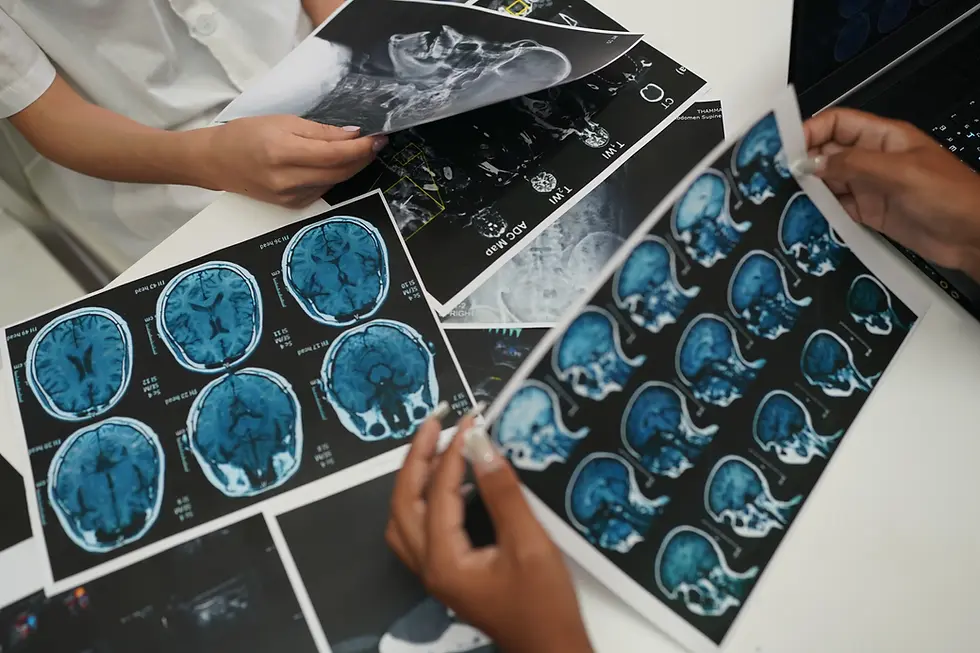
You can be asked for those stroke and mental health diagnosis tests:
A checkup. One of the many things a doctor will do is take your blood pressure and listen to your heartbeat. If you are worried about having a stroke, a neurological exam can help determine the severity of the symptoms.
Blood testing: Blood clotting time and blood sugar levels are two factors that can require examination. It is also possible that they will check for infections in you.
Computerized tomography (CT) scan: For a comprehensive picture of your brain, a computed tomography (CT) scan uses a sequence of X-rays. A computed tomography (CT) scan can reveal brain hemorrhage, ischemic stroke, malignancy, and other diseases and illnesses. To see the brain and neck blood arteries more clearly, a dye may be injected into your system. A CT angiography is the name given to this sort of examination.
Neuroimaging using magnetic resonance (MRI): By combining a magnetic field with strong radio waves, an MRI may produce a detailed image of the brain. This diagnostic tool can identify brain hemorrhages and ischemic strokes. It is possible to visualize the veins and arteries and the blood flow with the injection of dye into a blood vessel. Magnetic resonance angiography and magnetic resonance venography are the names of this diagnostic procedure.
Carotid ultrasound scan: This examination uses ultrasonic waves to produce high-resolution pictures of the neck's carotid arteries. Ultrasound imaging of the carotid arteries can reveal blood flow patterns and the accumulation of fatty deposits termed plaques.
Angiography of the brain: Although not often performed, this specific scan clearly shows the brain and neck arteries. Catheters are thin, flexible tubes that are implanted through tiny incisions, typically in the groin. The carotid or vertebral artery in the neck receives the tube after it has been guided via the main arteries of the body. Thereafter, X-ray imaging can reveal the arteries thanks to a dye injected into the blood vessels.
A cardiac echo scan: Echocardiography uses sound waves to show the heart in great detail. If you're worried that a blood clot in your heart could have caused a stroke, an echocardiography can pinpoint its origin.


Comments